

Disclosure: This post may contain affiliate links, including Amazon links. As an Amazon Associate I earn from qualifying purchases. Commissions may be earned at no extra cost to you. Content is for informational purposes only and not professional advice.
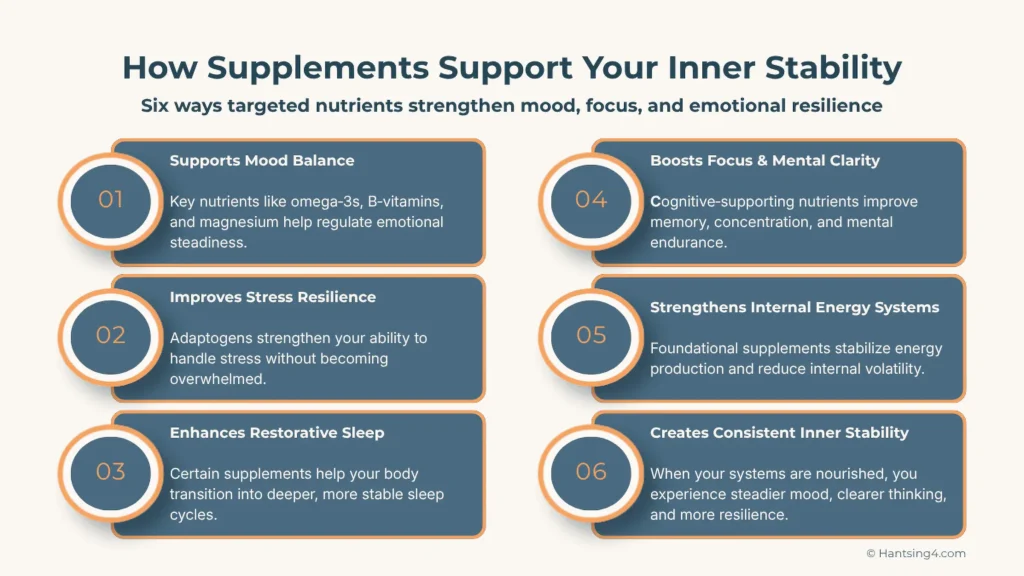
Inner stability depends on a network of nutrients, hormones, and neurotransmitters working together to keep your mind clear and your emotions steady. When these systems are nourished, you feel grounded and capable. When they’re depleted, you feel scattered, irritable, or fatigued. Modern life makes it easy to fall into deficiency, and supplements can help restore balance when your internal systems need support.
Why Supplements Matter for Emotional and Mental Balance
Your brain relies on a steady supply of nutrients to regulate mood, focus, and energy. Research indicates that low levels of omega‑3s, B‑vitamins, and magnesium are associated with mood disorders and cognitive challenges, underscoring how deficiencies can impact emotional well‑being. These nutrients help regulate neurotransmitters, support brain function, and maintain the chemical balance that keeps you emotionally steady.
When nutrient levels drop, your inner world often feels the impact before your physical body does. Low mood, irritability, disrupted sleep, and inconsistent energy are early signs that your internal systems need support. Supplements can help fill these gaps, especially when lifestyle demands make it challenging to obtain all the necessary nutrients from food alone.
How Modern Life Creates Nutrient Gaps
Even with a balanced diet, many people struggle to maintain optimal levels of essential nutrients. Stress, long work hours, processed foods, limited sunlight, and irregular eating patterns all increase your body’s nutrient demands. Vitamin D deficiency, for example, is common in people with limited sun exposure and is associated with changes in mood and energy. Broader research on nutrition and mental health shows that modern lifestyles can contribute to deficiencies that affect emotional resilience and cognitive clarity.
Supplements are not a replacement for healthy habits. They are a way to support your internal systems when life makes it difficult to meet all your needs through food alone.
Foundational Supplements for Inner Stability
Foundational supplements support the systems that influence mood, focus, and emotional resilience. They are not stimulants. They are stabilizers.
- Magnesium — Supports relaxation, sleep quality, and stress regulation. A 2023 systematic review and meta-analysis published in Frontiers in Psychiatry found a significant decline in depression scores following magnesium supplementation across seven randomized clinical trials, suggesting a meaningful role in mood support.
- Omega‑3 Fatty Acids — Support brain health, mood stability, and cognitive function. Studies highlight the importance of omega‑3s in mental health, especially EPA’s role in mood regulation.
- Vitamin D — Supports mood, immune function, and energy. Low levels are associated with low mood and fatigue.
- B‑Complex Vitamins — Support energy production, stress response, and neurotransmitter regulation. Deficiencies in B‑vitamins are linked to mood disorders and cognitive decline.
- Probiotics — Support gut health, which influences mood and emotional regulation through the gut‑brain axis.
Starting with one or two foundational nutrients is often enough to create meaningful improvements.
Supplements work best when they support nutritional habits that already stabilize your mood and energy.
Adaptogens and Stress Resilience
Adaptogens are herbs that help your body adapt to stress. They don’t eliminate stress; they improve your response to it. Research on herbal supplements shows that certain botanicals can support mood and anxiety management, making them useful tools for emotional resilience.
Common adaptogens include:
- Ashwagandha — Supports calm and reduces stress sensitivity.
- Rhodiola — Supports energy and mental endurance.
- Holy Basil — Supports emotional balance.
- Lion’s Mane — Supports focus and cognitive clarity.
Adaptogens work gradually, strengthening your internal resilience over time. They are most effective when paired with supportive habits such as movement, sleep, and steady nutrition. The real impact of supplementation shows up only when paired with habits that actually stick.
If you’re exploring this topic more seriously, you’ll appreciate the insights in The Science of Calm: Supplements That Support Your Stress Response System.
Supplements That Support Restorative Sleep
Sleep is one of the most important parts of your inner foundation. When sleep is disrupted, everything else becomes harder. Certain supplements can help your body transition into deeper, more restorative sleep.
Helpful options include:
- magnesium glycinate
- L‑theanine
- glycine
- chamomile extract
- melatonin (short‑term use only)
Melatonin is best used for temporary disruptions because long‑term use may interfere with your natural sleep‑wake rhythm. These supplements help your body relax and prepare for rest, supporting the internal systems that regulate sleep quality.
Supplements for Focus and Mental Clarity
If your inner world feels foggy or scattered, certain supplements can support cognitive function. Omega‑3s and B‑vitamins are well‑established for supporting brain energy and mental clarity, and evidence‑based reviews highlight the role of nutraceuticals in cognitive support.
Helpful options include:
- omega‑3s
- B‑vitamins
- ginkgo biloba
- lion’s mane
- acetyl‑L‑carnitine
These supplements support memory, focus, and mental endurance without overstimulation. They work best when combined with consistent sleep, hydration, and steady blood sugar.
Why Consistency Matters
Supplements do not work like caffeine. You do not feel an instant effect. Their power comes from consistency. Clinical reviews emphasize that supplements support mental health most effectively when used regularly over time, not as quick fixes.
Most supplements need:
- daily use
- steady routines
- time to build up in your system
Think of supplements as long‑term support rather than immediate solutions.
Using Supplements Intentionally
To get the most out of supplements, use them with awareness:
- start with foundational nutrients
- introduce one supplement at a time
- observe how your body responds
- avoid chasing quick fixes
- pair supplements with supportive habits
- choose high‑quality, third‑party tested brands
Even over‑the‑counter supplements can interact with medications or health conditions, so it’s important to discuss any new supplement with a qualified professional, such as a doctor or pharmacist. They can help ensure it’s appropriate for your situation.
What Supported Inner Wellness Feels Like
When your internal systems are nourished, you experience:
- steadier mood
- clearer thinking
- better sleep
- more emotional resilience
- improved focus
- consistent energy
Your inner world becomes easier to navigate because your body is supporting your mind. You feel more grounded and capable because your internal systems are no longer running on empty.
Bringing It All Together
Supplements are not a replacement for healthy habits. They are a support system. They help fill the gaps created by modern life and strengthen the internal systems that influence your mood, focus, and emotional stability. When used intentionally, supplements can become a powerful part of your inner foundation, helping you feel more resilient and more capable of meeting life with clarity and calm.
This is a great moment to explore Training for Inner Strength and The Energy Equation, which adds another layer to this discussion.