

Disclosure: This post may contain affiliate links, including Amazon links. As an Amazon Associate I earn from qualifying purchases. Commissions may be earned at no extra cost to you. Content is for informational purposes only and not professional advice.
If you are new to the concept of modern digital nomad life, you may want to read our post The Modern Nomad Blueprint, which explains the concept in detail.
Choosing your first digital nomad destination is one of the most important decisions you will make when starting a location independent lifestyle. The right destination gives you stability, confidence, and a smooth transition into remote living. The wrong destination creates stress, financial pressure, and unnecessary challenges.
Your goal is not to chase the most popular place. Your goal is to choose a destination that supports your work, your budget, and your lifestyle. This guide gives you a clear, practical framework to make that decision with confidence.
Why Your First Destination Matters
Your first destination sets the tone for your entire nomad journey. It influences your routines, your productivity, your confidence, and your overall experience. A supportive destination helps you settle into a rhythm, build healthy habits, and stay grounded while you adjust to a new way of living.
A good first destination helps you:
- build routines quickly
- stay productive
- manage your budget
- feel safe and comfortable
- enjoy your surroundings
- avoid burnout
- gain early wins that build momentum
Your first destination should feel like a soft landing. It should make life easier, not harder.
The Five Criteria That Matter Most
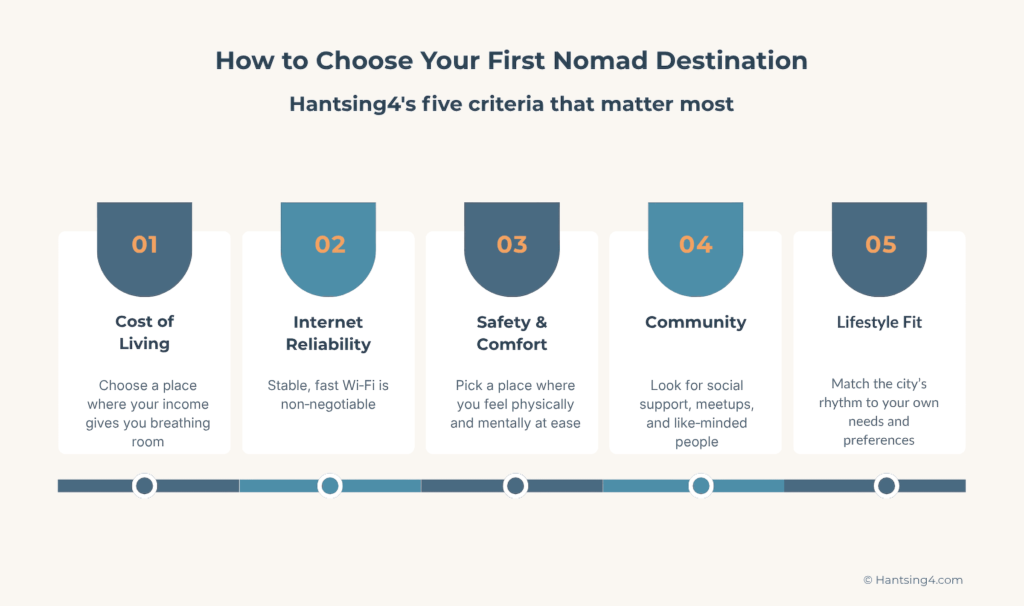
There are many factors to consider when choosing a nomad destination, but five criteria consistently determine whether a destination is a good fit for first time nomads.
- Cost of Living
- Internet Reliability
- Safety and Comfort
- Community and Connection
- Lifestyle Fit
If a destination scores well in these five areas, almost everything else becomes easier. These criteria become even more important when building a nomad lifestyle that avoids chaos and supports long‑term sustainability.
Cost of Living
Your first destination should be financially comfortable, not financially stressful. A lower cost of living gives you breathing room while you adjust to the lifestyle. Evaluate rent, food, transportation, coworking spaces, health care, entertainment, and unexpected expenses. Choose a place where you can live comfortably without stretching your budget. Financial comfort reduces pressure and allows you to focus on building routines and improving your work.
Internet Reliability
Reliable internet is the foundation of remote work. Before choosing a destination, research average internet speeds, availability of fiber connections, coworking spaces, cafés with strong Wi‑Fi, and backup options such as hotspots or local SIM cards. If the internet is unreliable, your work will suffer and your stress will increase. Always have a backup plan.
Safety and Comfort
Feeling safe in your environment is essential. Safety affects your mental well‑being, your ability to explore, and your overall experience. Consider neighborhood safety, walkability, transportation options, local culture, comfort with language, and access to basic services. Your first destination should feel welcoming and manageable. When you feel safe, you settle in faster, explore more freely, and build routines with confidence.
Community and Connection
Nomad life can feel isolating without a community. A strong nomad community helps you make friends, find support, and learn from others. Destinations with established communities offer easier social connections, shared experiences, practical advice, and a sense of belonging. Community is one of the biggest predictors of long‑term nomad success. The right people make every destination feel more like home.
Lifestyle Fit
Lifestyle fit determines how you feel day to day. Choose a place that matches your energy and preferences. Ask yourself whether you prefer cities or quiet towns, beaches or mountains, warm or cool climates, nightlife or calm evenings, fast‑paced or slow‑paced environments. Your destination should feel like a place you want to live, not just visit.
A Simple Method to Evaluate Any Destination
Use this four step method to make a clear, structured decision.
- Rate each criterion from one to five.
- Add the scores.
- Compare destinations based on total score.
- Choose the destination with the best overall fit.
This removes emotion and hype from the decision. It helps you choose based on alignment, not trends.
Choosing the right destination is much easier when you have travel‑ready systems that keep your life organized on the move.
The Best Types of Destinations for First Time Nomads
Certain types of destinations are ideal for beginners because they offer stability, affordability, and strong communities.
1. Established Nomad Hubs
These cities have everything you need to start smoothly.
Examples: Lisbon, Chiang Mai, Medellin, Mexico City, Bali.
They offer strong internet, affordable living, and large nomad communities.
2. Mid Sized Cities With Good Infrastructure
These cities offer comfort without overwhelming you.
Examples: Valencia, Porto, Da Nang, Tbilisi.
They are walkable, safe, and budget friendly.
3. Calm Coastal Towns
Ideal for people who want a slower pace.
Examples: Lagos, Split, Penang.
These towns offer a peaceful environment with enough infrastructure to support remote work.
Start with places that make life easy. You can explore more complex destinations once you have experience.
How Long You Should Stay in Your First Destination
Your first stay should be long enough to settle in and build routines. Short stays create stress and constant adjustment.
A good starting point is:
- one month minimum
- two to three months ideal
This gives you time to adjust, build routines, find your rhythm, and explore without rushing.
Longer stays create stability. Slow travel reduces burnout and helps you build a sustainable nomad lifestyle.
The Importance of Travel Rhythm
Travel rhythm is the pace at which you move. Moving too quickly creates stress and reduces productivity. Slow travel helps you:
- stay grounded
- reduce costs
- build deeper connections
- maintain routines
- avoid burnout
Your first destination should be part of a slow travel approach.
Practical Tips for Choosing Your First Destination
These simple tips help you avoid common mistakes:
- choose a place with strong English presence
- pick a destination with a large nomad community
- avoid extreme weather
- research neighborhoods before booking
- choose accommodation with a dedicated workspace
- check internet reviews before committing
- avoid remote or isolated areas for your first trip
Choose simplicity over novelty. Your first destination should make life easier, not harder.
What Your First Nomad Destination Should Feel Like
Your first destination should feel:
- safe
- comfortable
- inspiring
- manageable
- affordable
- energizing
- supportive
It should feel like a place where you can build routines, stay productive, and enjoy your surroundings without stress.
Conclusion
Choosing your first digital nomad destination is not about finding the most exciting place. It is about finding the place that supports your work, your well being, and your lifestyle. When you evaluate destinations based on cost, internet, safety, community, and lifestyle fit, you make a decision that sets you up for success.
Your first destination should feel like a foundation, not a challenge. It should help you build confidence, stability, and momentum as you begin your nomad journey.
This is a great moment to explore The Hidden Risks of Digital Nomad Life and The Sustainable Digital Nomad, which adds another layer to this discussion.