

Disclosure: This post may contain affiliate links, including Amazon links. As an Amazon Associate I earn from qualifying purchases. Commissions may be earned at no extra cost to you. Content is for informational purposes only and not professional advice.
If you are new to the concept of modern digital nomad life, you may want to read our post The Modern Nomad Blueprint, which explains the concept in detail.
A digital nomad lifestyle offers freedom, flexibility, and the chance to design your life on your own terms. But behind the Instagram‑ready version of remote work lies a set of risks that most beginners underestimate. These risks are not meant to scare you away. They are meant to prepare you. Preparation becomes much easier when your daily life is already organized through simple travel‑ready systems. When you understand them clearly and plan for them intentionally, nomad life becomes far more stable, sustainable, and enjoyable.
This guide gives you a grounded, practical understanding of the risks digital nomads face and the systems you can build to protect yourself. The goal is not to avoid risk entirely. The goal is to be prepared, informed, and resilient.
Political Instability and Local Uncertainty
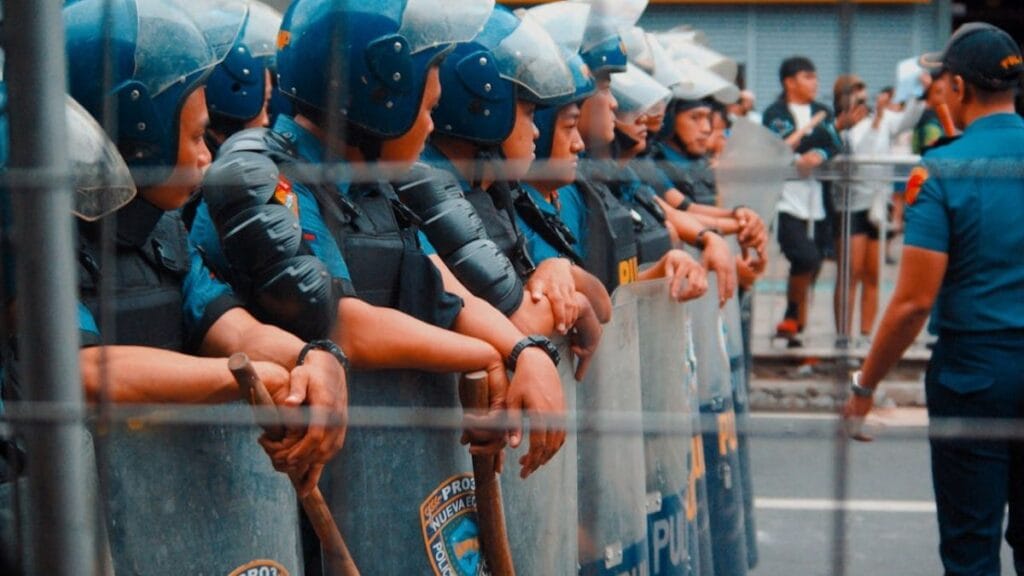
Political conditions can shift quickly, and nomads often arrive without understanding the local context. Instability affects safety, mobility, and access to services.
Common issues include:
- sudden protests or civil unrest
- changes in local laws
- transportation disruptions
- curfews or movement restrictions
- strained public services
Preparation strategies:
- research recent political history
- monitor local news during your stay
- stay aware of embassy advisories
- avoid politically sensitive areas
- choose stable regions for longer stays
Political awareness is part of responsible travel. It keeps you safe and helps you make informed decisions.
Legal Traps and Local Regulations
Every country has its own rules, and misunderstanding them can lead to fines, legal trouble, or forced departure.
Risks include:
- working illegally on a tourist visa
- violating local business or tax laws
- unknowingly breaking cultural or legal norms
- overstaying visas
- renting accommodations that violate local regulations
Preparation strategies:
- understand visa rules before arrival
- learn what is legally allowed for remote workers
- keep digital and physical copies of documents
- track visa dates carefully
- avoid “under the table” arrangements
Legal clarity protects your freedom to move and work.
Visa Issues and Border Challenges
Visas are one of the most overlooked parts of nomad life. Many beginners assume they can simply arrive and stay as long as they want. In reality, visa rules vary widely.
Risks include:
- short visa durations
- unexpected entry denials
- strict proof‑of‑funds requirements
- onward ticket requirements
- limited visa extensions
Preparation strategies:
- check visa duration and extension rules
- understand border expectations
- keep proof of accommodation and funds ready
- book refundable onward tickets when required
- consider digital nomad visas for longer stays
Visa awareness prevents stressful border experiences.
Crime and Personal Safety
Most nomads will encounter minor safety issues at some point. Petty crime is common in many popular destinations, and being unfamiliar with the environment increases vulnerability.
Common risks:
- pickpocketing
- bag snatching
- scams targeting foreigners
- unsafe transportation
- risky neighborhoods
Preparation strategies:
- research safe neighborhoods
- use reputable transportation
- avoid displaying valuables
- stay aware in crowded areas
- trust your instincts
Safety is not about fear. It is about awareness and smart habits.
Scams Targeting Travelers
Scams are part of the global travel landscape. They range from small inconveniences to serious financial losses.
Common scams include:
- inflated taxi fares
- fake rental listings
- credit card skimming
- tourist‑priced services
- misleading tour operators
Preparation strategies:
- read recent traveler reports
- use verified booking platforms
- pay attention to reviews
- avoid deals that seem too good
- use ATMs in secure locations
Awareness reduces risk more than anything else.
Healthcare Access and Medical Preparedness
Healthcare quality varies significantly across countries. Even minor issues can become stressful if you are unprepared.
Risks include:
- limited access to English‑speaking doctors
- high out‑of‑pocket costs
- lack of emergency services in remote areas
- difficulty accessing medication
- navigating unfamiliar healthcare systems
Preparation strategies:
- research local healthcare quality
- know where the nearest hospital is
- carry essential medications
- understand how to access care in that country
- keep digital copies of medical records
Health preparedness gives you peace of mind.

Infrastructure Gaps and Daily Life Challenges
Infrastructure determines how smoothly your daily life functions. Poor infrastructure can disrupt work, routines, and overall stability.
Risks include:
- unreliable electricity
- inconsistent water supply
- poor public transportation
- limited coworking options
- weak mobile networks
Preparation strategies:
- check infrastructure reviews
- choose accommodations with backup power
- stay in central, well‑connected areas
- test internet before committing long term
- keep a backup SIM or hotspot
Strong infrastructure supports strong routines.
Financial Volatility and Currency Risks
Living abroad exposes you to fluctuating currencies, unpredictable costs, and financial systems that may not work the way you expect.
Risks include:
- sudden currency drops
- ATM withdrawal limits
- international transaction fees
- frozen cards due to fraud alerts
- difficulty accessing funds
Preparation strategies:
- diversify access to money
- keep multiple cards from different banks
- use accounts with low international fees
- monitor exchange rates
- keep a small emergency cash reserve
Financial stability is one of the strongest forms of security for nomads.
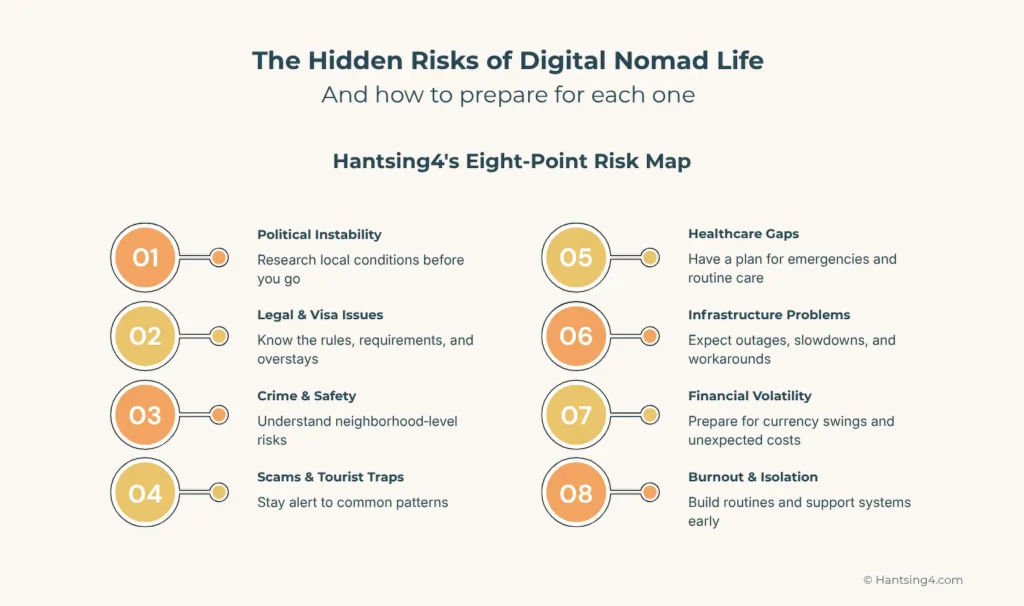
Here is a reference chart covering all the risks mentioned in this post and how to prepare for them.
Bringing It All Together
Digital nomad life is not dangerous, but it is complex. The risks are real, yet manageable when you approach them with awareness and preparation. The goal is not to eliminate risk. It is to build systems that protect your freedom, your work, and your well being.
When you understand political conditions, legal rules, safety habits, healthcare access, infrastructure quality, and financial systems, you travel with confidence. You make better decisions. You avoid unnecessary stress. You create a lifestyle that is not only exciting but sustainable.
This is a great moment to explore The Sustainable Digital Nomad and Choosing Your First Nomad Destination, which adds another layer to this discussion.