

Disclosure: This post may contain affiliate links. Commissions may be earned at no extra cost to you. Content is for informational purposes only and not professional advice.
If you are new to the concept of modern digital nomad life, you may want to read our post The Modern Nomad Blueprint, which explains the concept in detail.
Digital nomad life is often portrayed as spontaneous, effortless, and endlessly exciting. But anyone who has lived it for more than a few months knows the truth: nomad life is not sustained by freedom alone. It is sustained by systems, stability, and intentional design.
The people who thrive long term are not the ones who travel the most. They are the ones who build a lifestyle that supports mobility without sacrificing health, income, relationships, or identity.
This guide explores the deeper, often overlooked foundations of a sustainable nomad life; the systems, habits, and structures that allow you to live globally without burning out.
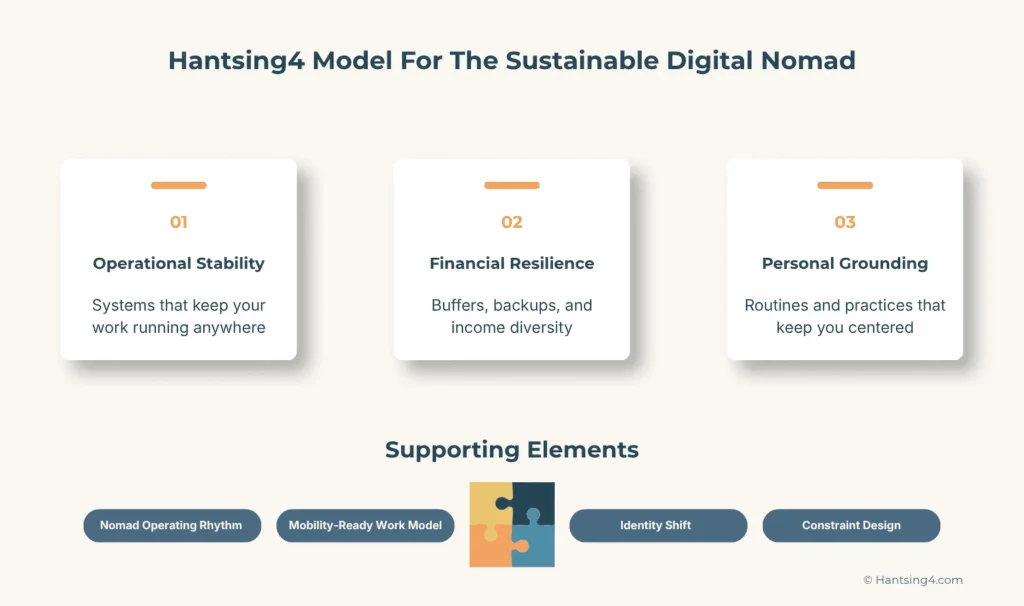
The Three Pillars of a Sustainable Digital Nomad Life
A long‑term nomad lifestyle rests on three interconnected pillars:
- Operational stability
- Financial resilience
- Personal grounding
Most nomads focus only on the travel side. The ones who last focus on the infrastructure that makes travel sustainable.
Operational Stability: The Systems That Keep Your Life Running Anywhere
Nomad life breaks when your life depends on geography. It becomes sustainable when your systems work regardless of where you are.
Operational stability includes:
- A portable work environment that fits in a backpack
- Cloud‑based everything (files, finances, communication, backups)
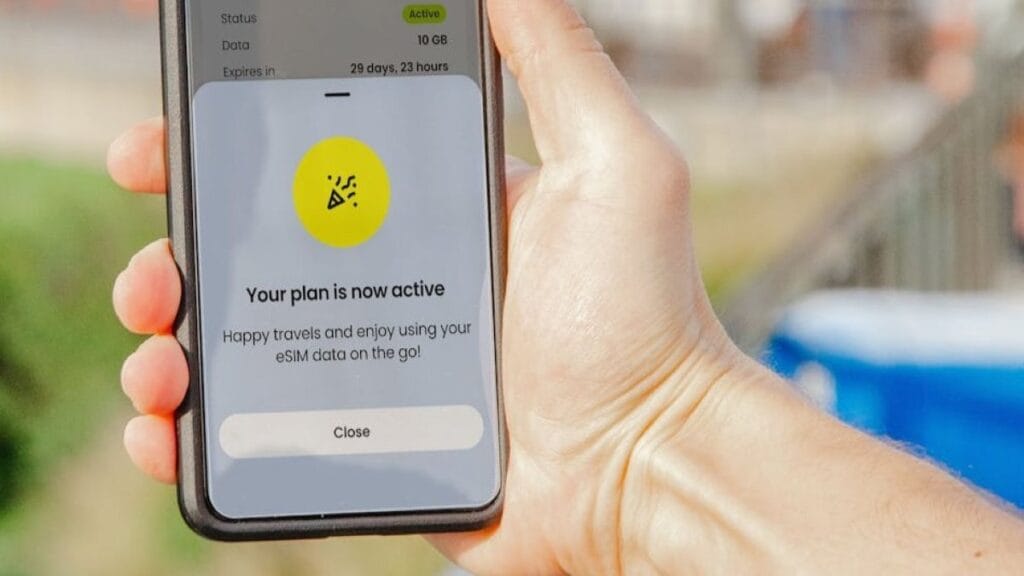
- Redundant connectivity (SIMs, eSIMs, hotspots, offline workflows)
- A predictable weekly rhythm that travels with you
- A personal operating system for tasks, notes, and decisions
Advanced nomads treat their life like a distributed system: resilient, redundant, and location‑agnostic.
The goal is not to eliminate uncertainty. It is to make uncertainty irrelevant.
Financial Resilience: Income That Survives Movement, Time Zones, and Variability
Nomad life becomes stressful when your income depends on stability. It becomes sustainable when your income is built for volatility.
Financial resilience includes:
- Multiple income streams, not one fragile source
- A mix of digital labor and digital assets
- Cash buffers for unpredictable costs
- Geo‑arbitrage awareness (earning in strong currencies, spending in weaker ones)
- A simple, portable financial system (cloud accounting, automated tracking)
The most resilient nomads build income that is:
- asynchronous (not tied to real‑time presence)
- scalable (not tied to hours)
- location‑independent (not tied to geography)
This is the difference between traveling while working and building a mobile career.

Personal Grounding: The Internal Stability That Prevents Nomad Burnout
Nomad burnout rarely comes from travel. It comes from the loss of structure, identity, and belonging.
Personal grounding includes:
- A clear sense of purpose beyond movement
- A stable identity that isn’t tied to location
- Routines that anchor your days
- A community strategy (online, local, or hybrid)
- A health baseline that travels with you
Experienced nomads know that freedom without grounding becomes chaos. Grounding without freedom becomes stagnation. Sustainable nomad life is the balance between the two.
The Nomad Operating Rhythm: How Long‑Term Nomads Structure Their Time
Short‑term nomads chase novelty. Long‑term nomads build rhythm.
A sustainable nomad rhythm often includes:
- Work blocks that stay consistent across time zones
- Travel windows that don’t disrupt your income
- Deep‑work days protected from movement
- Exploration days that prevent monotony
- Recovery days after travel transitions
The rhythm is not rigid. It is repeatable. It gives your life shape even when your environment changes weekly.
The Mobility‑Ready Work Model: How to Work Effectively From Anywhere
Working from anywhere is not about Wi‑Fi and laptops. It is about designing work that survives:
- inconsistent environments
- shifting schedules
- unpredictable noise
- variable energy levels
- cultural differences
A mobility‑ready work model includes:
- Asynchronous communication
- Clear deliverables
- Low‑friction collaboration tools
- Offline‑first workflows
- Templates and systems that reduce decision fatigue
The more your work depends on synchronous communication, the harder nomad life becomes.
The Identity Shift: From Traveler to Global Operator
Short‑term nomads think like travelers. Long‑term nomads think like operators.
Travelers ask:
Where should I go next?
Operators ask:
How do I design a life that works anywhere?
This shift changes everything:
- You stop chasing destinations and start designing systems.
- You stop relying on motivation and start relying on structure.
- You stop reacting to problems and start anticipating them.
The result is a lifestyle that feels stable, intentional, and expansive.
The Hidden Skill of Sustainable Nomads: Constraint Design
The most successful nomads do not rely on unlimited freedom. They create constraints that make freedom sustainable.
Examples include:
- limiting the number of countries per year
- choosing a home base or “anchor city”
- standardizing your packing list
- using a fixed weekly schedule
- choosing accommodations that match your work style
Constraints reduce cognitive load. They turn nomad life from improvisation into a repeatable system.
Bringing It All Together
A sustainable digital nomad life is not built on spontaneity. It is built on systems. When you combine operational stability, financial resilience, and personal grounding, you create a lifestyle that can last years, not months.
Nomad life is not about escaping structure. It is about building the right structure.
This is a great moment to explore The Hidden Risks of Digital Nomad Life and Choosing Your First Nomad Destination, which adds another layer to this discussion.