

Disclosure: This post may contain affiliate links, including Amazon links. As an Amazon Associate I earn from qualifying purchases. Commissions may be earned at no extra cost to you. Content is for informational purposes only and not professional advice.
Minimalism is often portrayed as empty rooms, monochrome wardrobes, and perfectly curated spaces. But the real power of minimalism has nothing to do with aesthetics. It is not about owning as little as possible or creating a home that looks impressive online. Minimalism is a belief system. It is a way of thinking that helps you remove what does not matter so you can focus on what does.
A simplified life is not restrictive. It is clear, intentional, and aligned with your values. When your environment supports your well being, your choices become easier and your days feel lighter. This post explores the deeper meaning of minimalism and how practical simplification can create more time, space, and freedom in your daily life
Minimalism as a Belief System
Minimalism begins with a mindset. It is the belief that life becomes richer when you remove what is unnecessary. Clutter, noise, and excess create friction that drains your energy and attention. Minimalism recognizes that more is not always better and that constant accumulation often leads to stress rather than satisfaction.
Minimalism is not about deprivation. It is about intention. It is about choosing what adds value and letting go of what does not. When minimalism becomes a belief system, it influences how you think, how you choose, and how you live
Why Simplification Matters
Modern life is filled with distractions. We accumulate possessions, commitments, digital noise, and mental clutter without realizing how much they weigh on us. Simplification matters because it helps you reclaim your time, your energy, and your attention.
Simplification helps you:
- reduce stress
- improve focus
- create mental clarity
- feel more grounded
- make better decisions
- live with more intention
- reduce emotional overwhelm
A simplified life is not about having less. It is about needing less. And it becomes even more powerful when paired with daily habits that reinforce clarity and freedom.
Below is our model for creating more time, space, and freedom in your life.
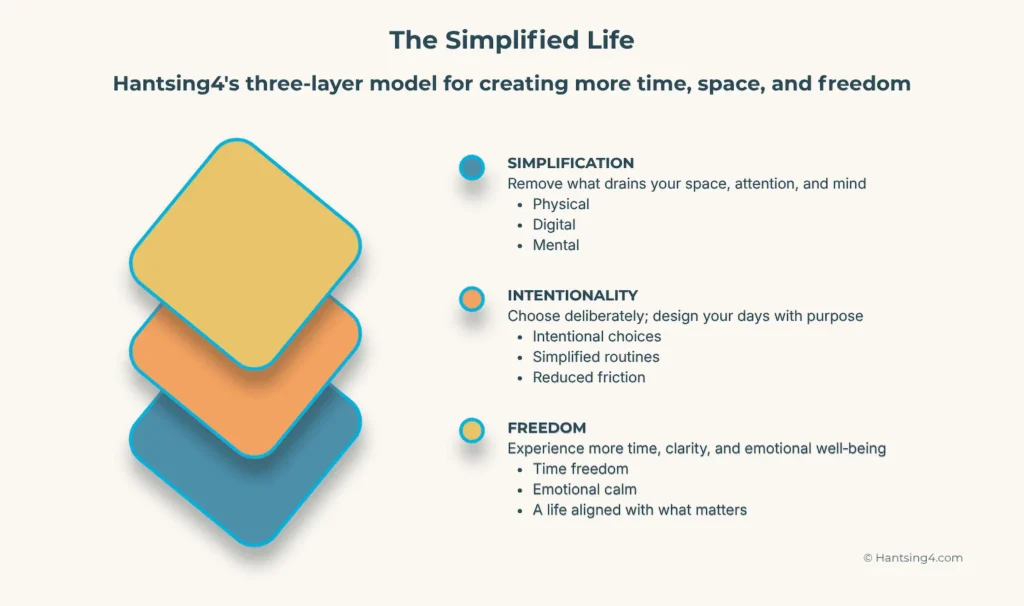
The Three Types of Clutter That Hold You Back
Clutter is not only physical. It shows up in multiple forms, and each one affects your well being.
1. Physical Clutter
Objects you do not use, need, or value. They take up space, create visual noise, and subtly increase stress. Research from Princeton University found that physical clutter competes for your attention and reduces your ability to focus.
2. Digital Clutter
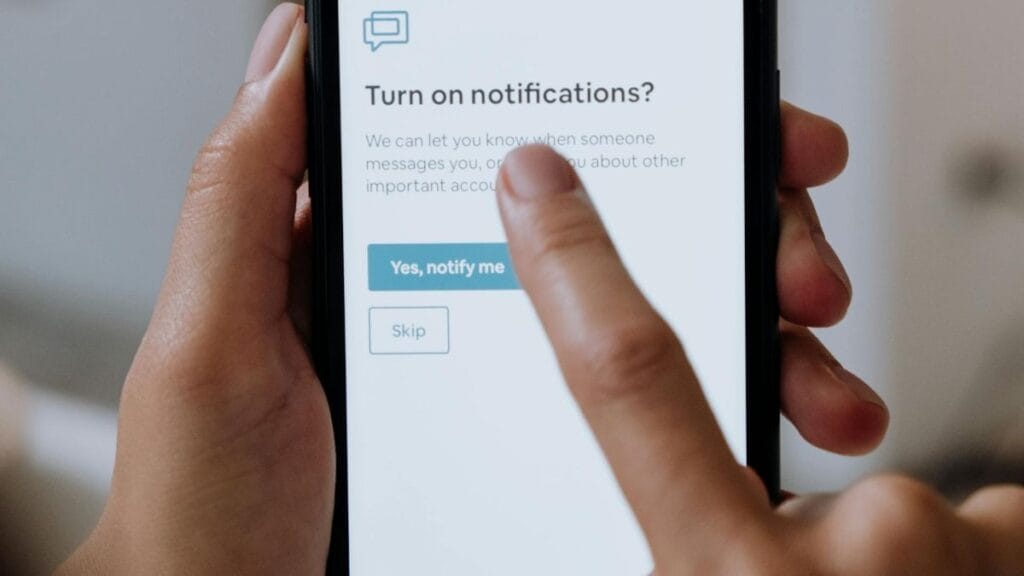
Notifications, files, emails, apps, and online distractions that pull your attention in every direction. Digital overload increases cognitive fatigue and makes it harder to stay present.
3. Mental Clutter
Unfinished tasks, unresolved decisions, and constant thoughts that create internal noise. Mental clutter is often the most draining because it follows you everywhere.
Simplification begins when you address all three.

Physical Simplification: Creating Space for Clarity
Your environment influences your mind more than you realize. A cluttered space increases stress hormones and reduces your ability to concentrate. Simplifying your physical environment helps you feel calmer, more focused, and more in control.
Start with small steps:
- clear one drawer
- organize one shelf
- remove items you no longer use
- donate what no longer fits your life
- create open space in your home
The goal is not to own as little as possible. The goal is to own what supports your life.

Digital Simplification: Reducing Noise in a Connected World
Digital clutter is one of the biggest sources of stress today. Constant notifications, endless feeds, and overflowing inboxes create mental fatigue. Digital simplification helps you reclaim your attention and reduce cognitive load.
Try simplifying your digital life by:
- turning off non essential notifications
- organizing your files
- deleting unused apps
- unsubscribing from unnecessary emails
- creating a clean digital workspace
Your digital environment should support your focus, not compete for it.
Mental Simplification: Creating Space in Your Mind
Mental clutter shows up as unfinished tasks, unresolved decisions, and constant internal noise. Mental simplification helps you create space for clarity and calm.
You can simplify your mind by:
- writing things down
- creating simple routines
- making decisions quickly
- reducing multitasking
- practicing mindfulness
- setting clear priorities
A clear mind is one of the greatest forms of freedom.
The Power of Intentional Choices
Minimalism is not about removing everything. It is about choosing intentionally. It is about asking whether something adds value to your life and whether it aligns with who you want to become.
Intentional choices help you:
- avoid impulse decisions
- reduce emotional clutter
- stay aligned with your values
- create a life that feels meaningful
- focus on what truly matters
Every choice becomes a reflection of who you want to be. Minimalism often becomes the foundation for a life you don’t need a vacation from, because it removes unnecessary friction.
Simplifying Your Routines
Your routines shape your days, and your days shape your life. Simplifying your routines helps you reduce friction and create more ease.
Consider simplifying:
- your morning routine
- your evening routine
- your work habits
- your meal planning
- your exercise schedule
- your weekly planning
Simple routines create stability and reduce decision fatigue.
Designing a Life With Less Friction
Friction is anything that makes your life harder than it needs to be. It can be clutter, disorganization, unclear priorities, or unnecessary commitments. Removing friction helps you create a smoother, more enjoyable life.
Ask yourself:
- What slows me down
- What drains my energy
- What creates stress
- What can I remove
- What can I simplify
- What can I automate
A simplified life is a life with fewer obstacles.
Minimalism and Time Freedom
Time freedom is one of the greatest benefits of minimalism. When you simplify your life, you create more time for what matters.
You gain time by:
- reducing unnecessary commitments
- eliminating distractions
- simplifying your environment
- creating efficient routines
- focusing on priorities
- removing tasks that do not matter
Time freedom is not about having more hours. It is about using your hours intentionally.
Minimalism and Emotional Well Being
A simplified life supports emotional health. It reduces stress, creates calm, and helps you feel more grounded.
Minimalism supports emotional well being by:
- reducing overwhelm
- creating mental clarity
- improving focus
- supporting healthier habits
- reducing decision fatigue
- creating a sense of control
A simplified life feels lighter, calmer, and more aligned.
What a Simplified Life Feels Like
When minimalism becomes part of your life, you feel:
- more present
- more grounded
- more focused
- more in control
- more peaceful
- more aligned with your values
Your life feels spacious. Your days feel intentional. Your mind feels clear.
Conclusion
Minimalism is not about owning less. It is about needing less. It is about removing what does not matter so you can focus on what does. A simplified life creates more time, more space, and more freedom. It helps you live with clarity, intention, and purpose.
A simplified life is not a trend. It is a way of living that supports your well being and aligns your daily choices with your deepest values.
If you’re ready to go a level deeper, my post on Life Design Changes That Create The Biggest Impact will help you expand this insight. Also read The Skills That Make a Flexible Lifestyle Possible.