

Disclosure: This post may contain affiliate links, including Amazon links. As an Amazon Associate I earn from qualifying purchases. Commissions may be earned at no extra cost to you. Content is for informational purposes only and not professional advice.
A comfortable home is not created by accident. It is the result of small, intentional choices that shape how you feel, how you move, and how you experience your space every day. Comfort is not about luxury or expensive décor. It is about designing an environment that supports your well being, reduces stress, and makes daily life smoother and more enjoyable.
Most people think comfort is a bonus, something to focus on after everything else is done. But comfort is foundational. When your home feels good, you feel good. When your environment supports you, your energy rises. When your space is calming, your mind becomes clearer. Comfort is not a luxury. It is a form of self support.
This guide blends practical enhancements with the reasoning behind them, helping you understand not just what to change, but why these changes matter. The goal is to create a comfortable home that feels warm, functional, and aligned with your lifestyle.
Comfort Is a Sensory Experience
Comfort begins with the senses. Your brain constantly processes information from your environment, including the textures you touch, the sounds you hear, the lighting around you, and the scents in the air. These sensory inputs shape your emotional state more than you realize.
A comfortable home engages the senses in a gentle, supportive way. It reduces harsh stimuli and increases soothing ones. This does not require major renovations. It requires awareness.
Sensory elements that influence comfort:
- Texture: Soft fabrics, natural materials, and warm surfaces create ease.
- Lighting: Warm, layered lighting helps your body relax and signals safety.
- Sound: Quiet spaces or soft ambient sounds reduce mental tension.
- Scent: Subtle, clean scents can shift your mood instantly.
- Temperature: A balanced temperature helps your body stay calm and focused.
When you design your home with sensory comfort in mind, you create an environment that supports emotional well being.
The Power of Comfort Anchors
A comfort anchor is a small element in your home that instantly shifts your state of mind. It is a cue that tells your brain, “You are safe. You can relax now.” These anchors are simple but powerful.
Examples of comfort anchors include:
- a soft throw blanket on your favorite chair
- a warm lamp that creates a cozy glow
- a scented candle you light in the evening
- a textured rug that feels grounding under your feet
- a small plant that brings life to a room
- a reading nook that invites you to slow down
Comfort anchors work because they create emotional associations. When you interact with them, your brain releases signals of calm and familiarity. Over time, these anchors become part of your daily rhythm.
Why Comfort Enhancements Improve Productivity
A comfortable home does not just help you relax. It also improves your productivity. When your environment feels supportive, your mind becomes clearer and your energy becomes more stable. You are less distracted, less tense, and more able to focus.
Comfort enhances productivity in three ways:
- It reduces background stress. A soothing environment keeps your nervous system regulated.
- It reduces friction. Comfortable seating, good lighting, and organized spaces make tasks easier to start and finish.
- It increases emotional resilience. When your home feels good, you recover faster from stress and maintain better mental clarity.
Comfort is not the opposite of productivity. It’s the foundation of it.
Designing for Daily Ease
A comfortable home supports your daily routines. It makes everyday tasks smoother and more enjoyable. This does not require a full redesign, only thoughtful adjustments.
- Create a soft landing zone near the entrance for keys, bags, and essentials
- Add a warm lamp to your bedroom to support a calming evening routine
- Place a comfortable chair in a quiet corner for reading or reflection
- Use soft, breathable bedding to improve sleep quality
- Add a small tray or basket to keep frequently used items accessible
- Use gentle, warm lighting in the bathroom for early mornings and late nights
These small enhancements reduce friction and make your home feel more supportive. Many of these small enhancements work best when paired with simple organization systems that keep your space running smoothly.

The Emotional Impact of a Comfortable Home
Comfort has a direct impact on your emotional well being. When your home feels warm and inviting, your stress levels decrease. You feel more grounded, more present, and more connected to your space.
A comfortable home also strengthens your sense of identity. It reflects who you are and what you value. It becomes a place where you can recharge, think clearly, and show up as your best self.
Comfort is not superficial. It’s emotional architecture.
A comfortable home becomes even more powerful when built on intentional design principles that support your goals and routines.
Comfort and Lifestyle Flow
Lifestyle flow is the ease with which you move through your day. A comfortable home enhances this flow by reducing obstacles and creating supportive pathways.
For example:
- A soft rug in the morning helps you start the day gently
- A comfortable chair encourages you to take mindful breaks
- A warm lamp signals your body to wind down in the evening
- A cozy corner invites you to read instead of scrolling
- A well‑placed plant adds calm to a busy room
These small elements guide your behavior without forcing it. They create a rhythm that feels natural and restorative.
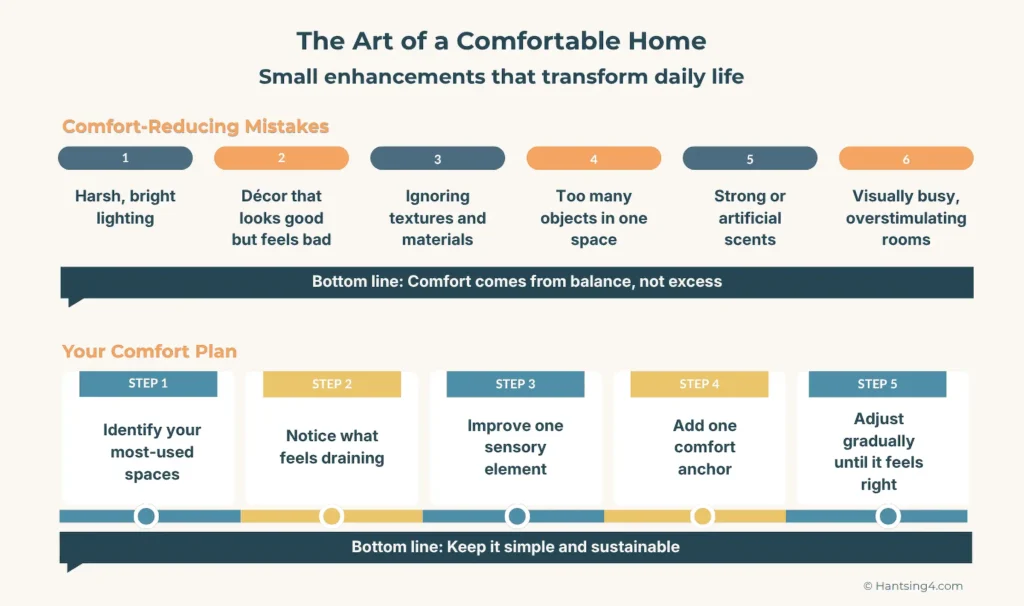
For a quick reference to the concepts explained here, see our chart below.
Common Mistakes That Reduce Comfort
As you enhance your home, avoid these common comfort reducing mistakes:
- Using harsh, bright lighting in every room
- Choosing décor that looks good but feels uncomfortable
- Ignoring textures and materials
- Overloading spaces with too many objects
- Using scents that are too strong or artificial
- Creating rooms that feel visually busy or overstimulating
Comfort comes from balance, not excess.
How to Build Your Comfort Plan
To create a comfortable home, start with a simple plan:
- Step 1: Identify the spaces where you spend the most time.
- Step 2: Notice what feels uncomfortable or draining in those spaces.
- Step 3: Choose one sensory element to improve, such as lighting, texture, sound, scent, or temperature.
- Step 4: Add one comfort anchor to each key area.
- Step 5: Adjust your space gradually until it feels aligned with your lifestyle.
This approach keeps the process simple and sustainable.
Bringing It All Together
A comfortable home is built through small, intentional enhancements that support your senses, your routines, and your emotional well being. When your environment feels good, your life feels easier. You move through your day with more clarity, more calm, and more energy.
Comfort is not a luxury. It is a form of self care. And when you design your home with comfort in mind, you create a space that supports the best version of you.
If this idea resonates, you may find even more clarity in our post on Simple Home Organization Tips for Busy People.