
Disclosure: This post may contain affiliate links. Commissions may be earned at no extra cost to you. Content is for informational purposes only and not professional advice.
A home that always looks clean is not the result of marathon cleaning sessions or an unusually tidy personality. It is the result of a few simple routines done consistently, routines that prevent mess from building up rather than tackling it after it already has.
The difference between a home that feels perpetually overwhelming and one that feels calm and put-together is rarely effort. It is timing. Small actions done at the right moments keep everything manageable. The same tasks left until they pile up become a project.
Why This Actually Matters
Research from the American Cleaning Institute’s 2024 survey of 1,000 adults found that nearly 9 in 10 Americans feel their best, both mentally and physically, when their home is clean, with 70% reporting a sense of accomplishment, and measurable reductions in stress and anxiety. A tidy home is not just aesthetically pleasing. It actively supports how you feel every day.
These five routines are the ones that make the biggest difference with the least effort. Start with one, build from there, and watch how quickly your home begins to feel like it runs itself.
Five Effective Home Cleaning Routines That Require Minimal Effort
Routine 1: The Daily 10-Minute Reset
This is the single most effective routine you can build, and it costs less than ten minutes a day. The daily reset works because it stops mess from snowballing. Rather than waiting until disorder has accumulated and feels overwhelming, you address it at the small-stuff stage, when everything is still quick and easy to handle.
The reset works best at a consistent time, either in the evening before bed or at the end of the workday when you transition out of productive mode. Consistency is what turns it from a task into a routine that eventually happens almost automatically.
What to do in 10 minutes
- Return items to where they belong
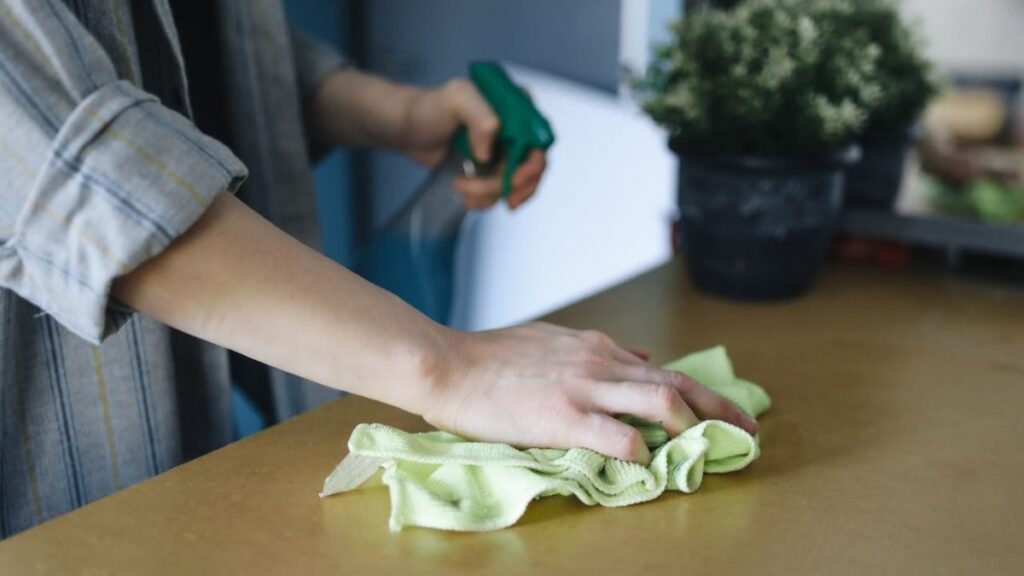
- Wipe down kitchen counters and bathroom surfaces
- Do a fast visual sweep of high-traffic areas and tidy what you see
- Reset cushions, throws, and any visible clutter
That is genuinely it. Ten minutes at a consistent time each day keeps your home in a state that feels clean and calm without requiring anything more intensive than a few focused minutes.
Routine 2: The Weekly Dust and Vacuum
Dust and dirt accumulate faster than they appear to, particularly in smaller spaces, in rooms with soft furnishings, and in homes with pets or children. A weekly dust and vacuum routine catches this buildup before it becomes visible and entrenched, which is far easier than addressing it once it is.
A 2023 study published in Social Psychological and Personality Science found that both actual cleaning and the visual simulation of cleaning measurably reduced psychological and physiological stress responses across more than 3,000 participants, suggesting that the act of maintaining your space regularly has benefits that extend well beyond the cleanliness itself.
Weekly checklist
- Dust surfaces, shelves, and decorative items
- Vacuum floors, rugs, and upholstered furniture
- Shake out mats and cushions
- Spot clean any visible marks on walls, cabinets, or appliances
Keeping this routine to a consistent day of the week removes the decision fatigue of wondering when it needs to happen. The predictability makes it easier to maintain, and the result is a home that looks polished and cared for throughout the week rather than only immediately after a deep clean.
Routine 3: The Monthly High-Touch Deep Clean
Your daily and weekly routines keep the visible surfaces clean. The monthly deep clean addresses what those routines do not reach: the surfaces and fixtures that get touched constantly but rarely get deliberately cleaned.
Door handles, light switches, appliance handles, cabinet pulls, faucets, and bathroom fixtures all accumulate grime gradually and invisibly. A monthly pass through these areas with an appropriate cleaner takes far less time than most people expect, typically thirty minutes for the whole home, and it is what keeps everything looking genuinely well maintained rather than just tidied.
Monthly focus areas
- Door handles and light switches throughout the home
- Kitchen appliance handles and cabinet pulls
- Bathroom fixtures and faucet bases
- Baseboards and window sills
- Inside the microwave and refrigerator handles
- Mirrors and glass surfaces
This is the routine that keeps your home looking new over time, because it addresses the gradual accumulation that makes spaces start to look worn and neglected even when they are otherwise tidy.
Routine 4: Seasonal Decluttering
Every season, your home accumulates things that no longer belong: clothes that did not make it back into rotation, products that have expired, items stored in places that stopped making sense, and objects that belonged to a version of your life that has already moved on. Seasonal decluttering is the routine that keeps this accumulation from taking hold.
Research on possession clutter and psychological well-being published in the Journal of Environmental Psychology found that an overabundance of possessions creates a persistent sense of chaos that undermines the feeling of home and reduces overall well-being. Addressing it four times a year in a structured and manageable way prevents it from ever reaching the overwhelming stage
Seasonal tasks
- Rotate clothing to reflect the current season and donate what no longer fits or gets worn
- Clear expired products from the bathroom, kitchen, and medicine cabinet
- Refresh storage areas and reassess what belongs where
- Donate or pass on items that no longer serve a purpose in your current life
- Reorganize high-traffic spaces that have drifted from their intended function
A seasonal declutter does not need to take a full day. Two to three hours approached methodically, one area at a time, is enough to keep your home feeling light, organized, and easy to maintain between sessions.
Routine 5: Smart Storage That Works for Your Life
The most underrated home maintenance routine is not a cleaning task at all. It is the ongoing practice of making sure your storage is set up in a way that actually matches how you live. When storage is well designed, everything has a place, putting things away requires almost no effort, and your home stays tidy with minimal active maintenance.
The principle is straightforward: items you use every day should be the most accessible. Items used occasionally can be stored with a little more effort to reach. Items rarely used can be stored out of sight entirely. When this hierarchy is respected, the natural flow of daily life keeps your home organized rather than gradually undermining it.
How to approach smart storage
- Use baskets, bins, and organizers to group similar items and keep surfaces clear
- Keep everyday essentials within immediate reach in the spaces where you use them
- Use closed storage for items that create visual clutter when left out
- Review and adjust your storage setup seasonally so it continues to reflect how you actually use your space
- Apply the one-in-one-out principle when bringing new items into the home
When everything has a designated place and that place makes intuitive sense, tidying becomes a matter of seconds rather than minutes. The daily reset is faster. The weekly routine is easier. The whole system compounds.
Quick Tips for a Home That Always Looks Clean
Beyond the five routines, a few simple habits make a noticeable difference in how consistently tidy your home feels day to day:
- Keep cleaning tools visible and within easy reach so small tasks get done immediately rather than deferred
- Address small messes before they become larger ones: a surface wiped now takes ten seconds; the same surface left for a week takes considerably longer
- Use closed storage throughout the main living areas to reduce visual clutter without requiring anything to be put away
- Reset one room at a time rather than trying to tidy the whole house at once, which can feel overwhelming and lead to doing nothing instead
The homes that always seem to look effortlessly clean are not maintained by people with more time or more discipline. They are maintained by people who have built a few reliable routines and made the environment easy enough to keep that the routines actually stick.
© Hantsing4
Bringing It All Together
A home that looks and feels new is not the result of cleaning more. It is the result of cleaning smarter: a daily reset that takes ten minutes, a weekly routine that prevents buildup, a monthly pass through the surfaces that matter, a seasonal declutter that keeps possessions intentional, and a storage system that makes tidiness the natural default rather than the constant effort.
Start with one routine. Build the habit until it feels automatic. Then add the next. Within a few weeks, your home will begin to feel like it maintains itself, because in the most practical sense, it will be.
For a deeper look at how this plays out in daily life, take a moment to read A Simple Home Organization System Anyone Can Set Up in One Weekend.